AI is here, let's welcome it! I will have a workshop session related to optimising ChatGPT and Codex in the work environment. More details are coming.
About Me
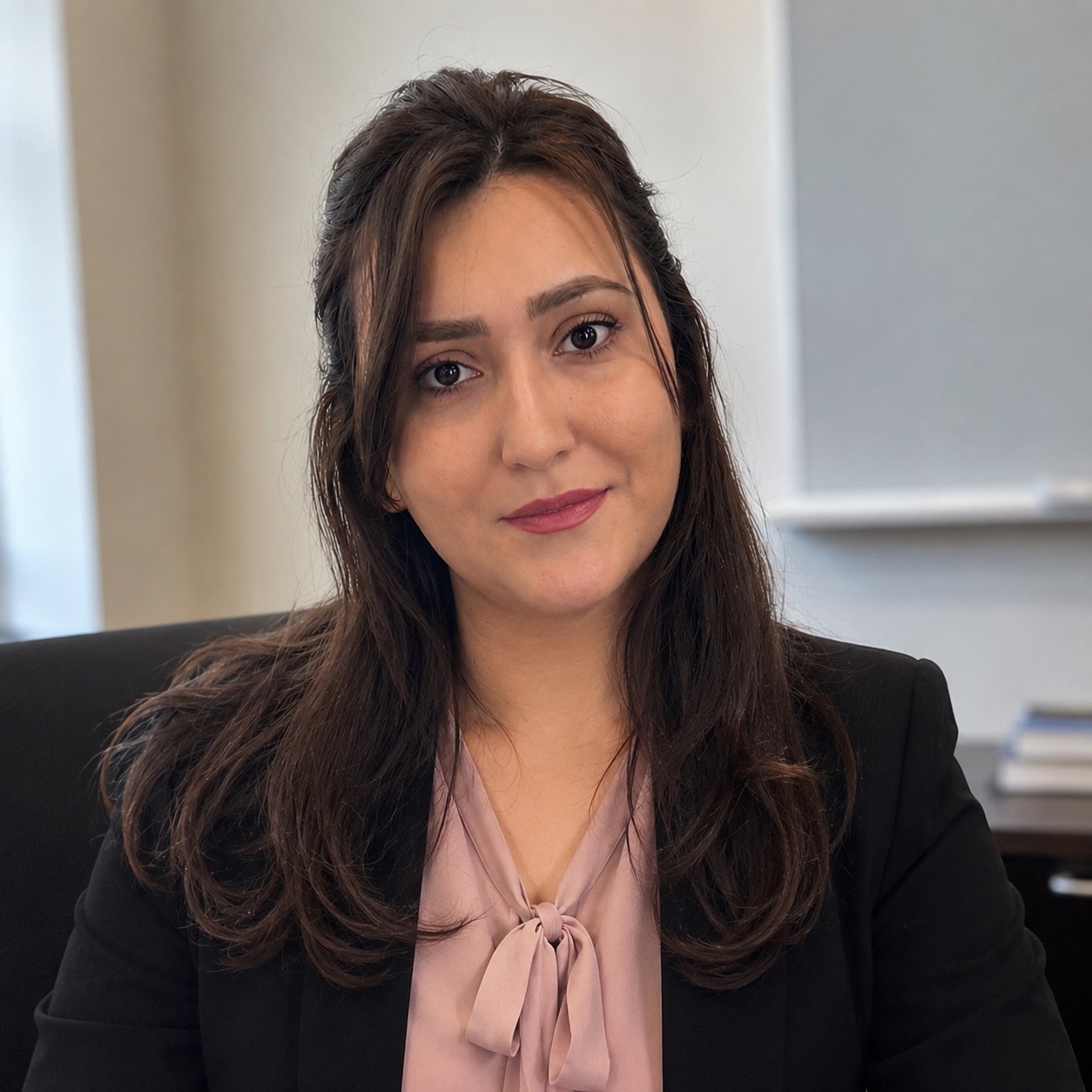
Hi there. This is Maryam Hashemi’s personal page.
I’m an AI scientist based in Sydney. Currently, I work as a Data Scientist at the City Futures Research Centre, where I analyse large-scale datasets related to urban development in Australia and apply large language models (LLMs) and machine learning techniques to extract insights.
My expertise lies in Artificial Intelligence (AI), Machine Learning (ML), and the development of intelligent systems. I am particularly passionate about transparent and trustworthy AI, leveraging AI for social good, and solving real-world problems.
The best way to reach me is by email, which you can find in the left-side menu. To stay updated with my latest work and activities, please visit the News section below.
Computer Skills
Programming
Python90%
C++65%
HTML65%
MATLAB60%
SQL50%
Libraries and Frameworks
TensorFlow95%
PyTorch95%
Hugging Face90%
Scikit-learn90%
Transformers100%
OpenCV100%
Gym80%
Tools $ Platforms
PostgresSQL80%
Git80%
AWS80%
APIs50%
Career
Data Scientist
- Scraped, collected, and maintained Australian development and construction application data using PostgreSQL and APIs.
- Developed conversational AI language agents using RAG systems to classify applications, generate recommendations, and predict application processing timelines.
AI Engineer
- Designed and implemented a novel agent-based model (ABM) in Python to simulate and forecast pricing dynamics in the Brisbane fuel retail market.
- Developed predictive spatio-temporal machine learning models and data analysis tools using Python, Pandas, TensorFlow, and Scikit-learn to generate data-driven insights for stakeholders.
AI Engineer
- Designed and implemented personalised conversational AI agents using large language models to improve user interaction and comprehension.
- Researched state-of-the-art techniques and developed the solution in Python using the Transformers library and GPT-based APIs.
- Evaluated system performance and refined the model to improve response quality, with 69% of users expressing interest in using the conversational personalised agent in the future.
Lecturer and Tutor
- Taught courses including Artificial Intelligence, Deep Learning and Neural Networks, and Advanced Machine Learning.
- Key focus areas include computer vision, neural networks, reinforcement learning, statistical models, and Python.
Publications
- Driver Safety Development: Real-Time Driver Drowsiness Detection System Based on Convolutional Neural Network. Maryam Hashemi, Alireza Mirrashid and Aliasghar Beheshti Shirazi, SN Computer Science Journal, Springer, 2020. Paper
- Towards Safer Roads: A Deep Learning-Based Multimodal Fatigue Monitoring System. Maryam Hashemi, Bahar Farahani and Farshad Firouzi, International Conference on Omni-layer Intelligent Systems (COINS), IEEE, 2020. Paper
- Detection and identification of defects in 3D-printed dielectric structures via thermographic inspection and deep neural networks. Barbara Szymanik, Grzegorz Psuj, Maryam Hashemi, and Przemyslaw Lopato, Materials Journal, MDPI, 2021. Paper
- Delve into Multiple Sclerosis (MS) Lesion Exploration: A Modified Attention U-Net for MS Lesion Segmentation in Brain MRI. Maryam Hashemi, Mahsa Akhbari, and Christian Jutten, Computers in Biology and Medicine Journal, Pergamon, 2022. Paper
- Understanding User Preferences in Explainable Artificial Intelligence: A Survey and a Mapping Function Proposal. Maryam Hashemi, Ali Darejeh, and Francisco Cruz, 2024. Paper
- From Axioms to Transparency: A User-Centric Axiomatic Approach for Explainable AI in Participatory Budgeting. Maryam Hashemi, Ali Darejeh, and Francisco Cruz, International Conference on AI and Emerging Technology for Sustainable Future (ICAISF 2026), July 2026, Catania, Italy.
- A User Centric Axiomatic Path to Explainable Reinforcement Learning. Maryam Hashemi, Ali Darejeh, Angel Ayala, and Francisco Cruz, 2026 (Under review).
Education
B.Sc. in Electrical Engineering
Thesis Title: Designing an Android application to have an Intelligent Greenhouse.
Description: Control of vital plant conditions through Internet of Things technologies and an Android application.
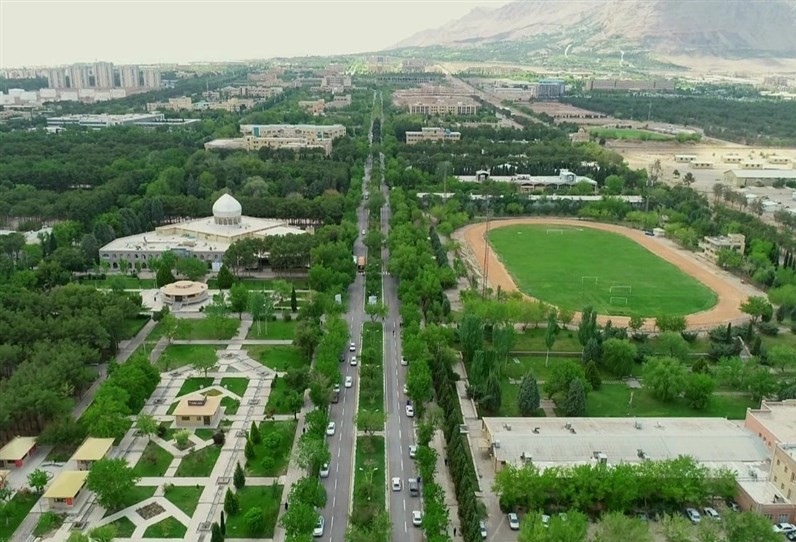
M.Sc. in Information Technology
Thesis Title: Deep learning-based Driver Distraction and Drowsiness Detection.
Description: Analysis of drivers' faces to detect risky situations such as sleeping by designing deep neural networks for real-time tasks.
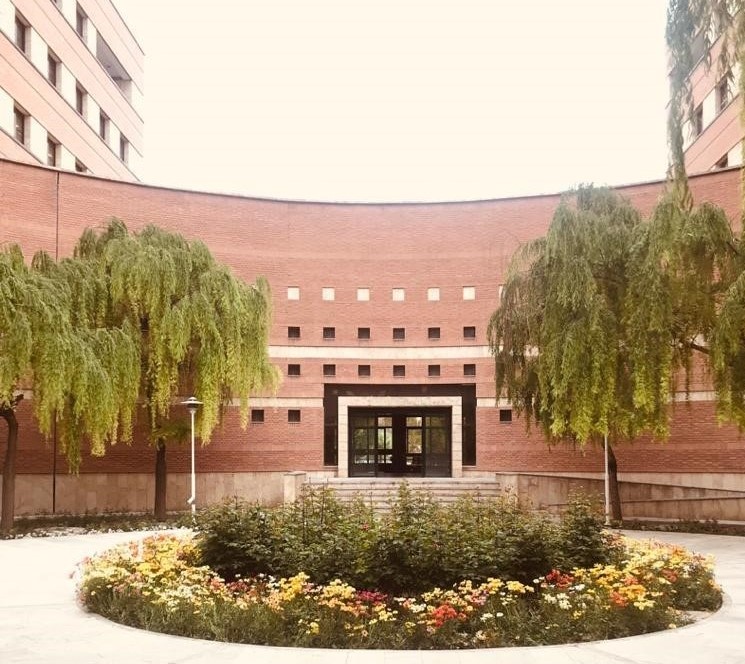
Ph.D. in Computer Science and Engineering
Thesis Title: Toward a transparent world: axiomatic explainable artificial intelligence.
Description: Developing algorithms that can generate automated justification and reasoning for AI systems based on axioms.
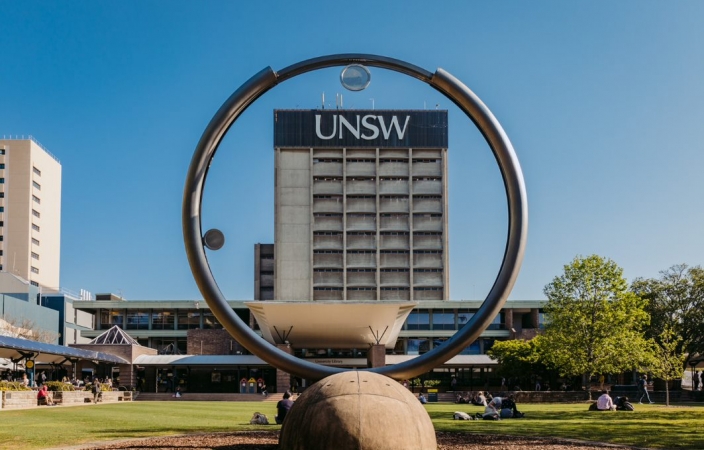
News
I presented our work, From Axioms to Transparency: A User-Centric Axiomatic Approach for Explainable AI in Participatory Budgeting, at the International Conference on AI and Emerging Technology for Sustainable Future (ICAISF 2026) in Italy.
I am starting a new role as a Data Scientist at the City Futures Research Centre, where I apply large language models (LLMs) and machine learning techniques to improve development application processes in the urban construction sector.